Blockchain tracing that stands up to scrutiny.
I follow stolen and misappropriated digital assets across chains to the point they enter a regulated business — and produce the evidence that solicitors, investigators and law enforcement need in order to act.
Once cryptocurrency leaves your wallet, no one can reverse the transaction. What can be done is follow it.
Blockchain ledgers are public and permanent. With the right method, funds can usually be tracked through the wallets, bridges and swap services used to launder them until they reach a business that is legally required to know who its customers are. That is the point at which courts and law enforcement can act. My work is to get a case to that point, with documentation that holds up when it is examined.
How this works
Trace the funds.
From your transaction outward — every hop, every bridge, every chain — to identifiable off-ramps. You receive a documented trail, not a conclusion to take on faith.
Attribute the destination.
Where funds arrive at a centralised exchange, custodian or payment processor, I identify the service and record the deposit addresses and timestamps that identify the receiving account.
Build the file.
A structured evidence package a solicitor can attach to a disclosure application, a compliance team can act on, or a police unit can open a case from.
One victim is a complaint. Forty victims is an investigation.
Most cryptocurrency fraud is not a single crime against a single person. The same infrastructure — the same wallets, the same deposit addresses, the same off-ramps — is used against dozens or hundreds of victims at once.
Reported individually, each loss enters a queue with thousands of others. Consolidated into one evidenced file showing a common scheme and an aggregate loss, the same facts reach a different desk entirely.
Where I can establish on-chain that separate victims were defrauded through shared infrastructure, I build the case as one file. It changes how seriously it is taken, and it divides the legal costs across the group instead of loading them onto one person.
- Chains
- Bitcoin · Ethereum and ERC-20 · Tron and TRC-20 · Solana
- Instructed from
- United States, Canada, United Kingdom, European Union, Switzerland, Norway, Australia, Singapore
- Languages
- Investigations conducted in English, Swedish and Finnish
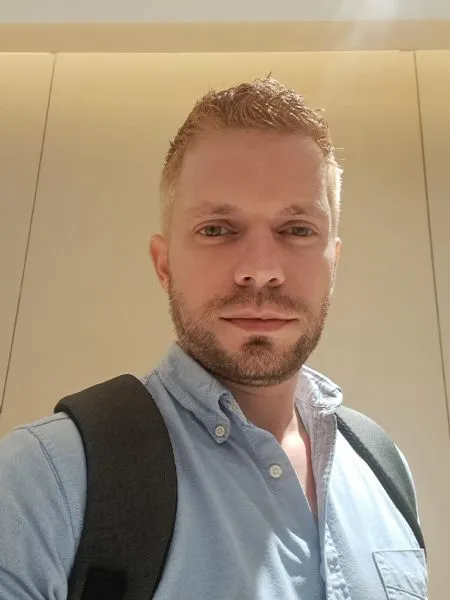
Leonard Peterson
I trace stolen cryptocurrency and build the evidence needed to do something about it. I work in English, Swedish and Finnish.
No fee to find out where you stand. The initial consultation and assessment are free. If I take a case forward, I am paid a percentage of funds actually returned to you — after the money is in your bank account, not before. I never ask for payment up front, and I never ask you to send cryptocurrency for any reason.
I am not a recovery service. I do not hold client funds. I cannot reverse a blockchain transaction and I cannot compel an exchange to freeze an account — that requires a court order or a law enforcement request. A significant proportion of traced funds are never returned. I will tell you what I think your prospects are before you commit to anything.